


VIDEO ANALYSIS: ROUNDTABLE MEETING COMPACT2025

The Hunger and undernutrition are two of the greatest scourges facing our planet today. We can eliminate both, and we can do so by 2025 which will also help end extreme poverty and will contribute to achieving multiple Sustainable Development Goals. But there are significant knowledge gaps related to eliminating hunger and undernutrition that must first be filled for effective and cost-efficient action. Compact2025 should address these gaps by acting as a Knowledge and Innovation Hub that will help guide countries in developing and implementing strategic actions for food security and nutrition. By working across sectors and with multiple stakeholders to provide evidence-based knowledge with an emphasis on country-led progress, Compact2025 is contributing to the achievement of global food security and nutrition for 2025.
2. ROUNDTABLE DISCUSSIONS
Compact 2025 is an initiative for ending hunger and malnutrition by 2025 and by building a knowledge base and promoting innovation. Compct2025 seeks to help countries develop, scale up, and communicate policies and programs for the biggest impacts. Compact 2025 initiative was launched officially in November, 2015 in USA by the International Food Policy Research Institute and has chosen Rwanda and Ethiopia as the focal country to host the roundtable discussions in March 2016. Compact 2025 roundtable discussions bring together stakeholders from around the world to set priorities, innovate, learn and fine-tune actions, build on successes share lessons to accelerate progress
Eliminating hunger and undernutrition is key to ending extreme poverty. Doing so will pave the way for achieving multiple Sustainable Development Goals (SDGs) the anchor of the post-2015 agenda. We can end hunger and undernutrition and we can do so by 2025.
Compact2025 will serve as a global knowledge and innovation hub to experiment, learn, and share evidence for pragmatic, action-oriented strategies. It will offer evidence-based context-specific strategies to support countries, institutions, and initiatives for the elimination of hunger and undernutrition by 2025 with the following approaches:
• Sharing knowledge
• Supporting evidence-based policies and experiments
• Mobilizing a data revolution
• Facilitating country-led strategies and investments
• Strengthening inclusive and accountable partnerships
Compact2025 will be a multisectoral and multistakeholder partnership that complements and leverages existing initiatives and networks by serving as a platform to experiment, learn, and share evidence for informing policy choices and strategies to accelerate the reduction of hunger and undernutrition.
Rwanda is committed to ending hunger and undernutrition by 2025.
Joining the roundtable discussion were over 100 participants, including high-level representatives from the Rwandan ministries of Foreign Affairs and Cooperation, health, agriculture, gender, local government, education, and others Donors, researchers, and civil society communities were also represented. The discussions informed how and where Compact2025 can support existing initiatives in Rwanda to fill research, policy, and implementation gaps in order to accelerate progress in Rwanda.
A draft scoping study was developed to inform the roundtable and spark discussion. The study provides an overview of Rwanda’s current food security and nutrition challenges and opportunities; the key relevant strategies, policies, and programs in place; and an assessment of knowledge, policy, and implementation gaps that hold back progress. It will be updated and finalized with inputs from the roundtable discussion, and will include a preliminary plan of action.
The Rwanda roundtable discussion was the first of such meetings taking place in Compact2025 focal countries. The Ethiopia roundtable discussion took place on March 28, 2016 in Addis Ababa, Ethiopia. For focal countries Bangladesh and Malawi, roundtable discussions are scheduled for May 2016.
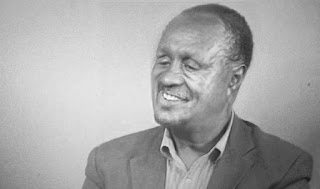 Author Prof. Dr. Rugema D. Muyombano


0Awesome Comments!